

Sustainability & Circular Design


Rethinking the Problem
According to a 2024 report by the Australian Furniture Association, approximately 30,000 tonnes of commercial furniture are discarded in Australia each year, with 95% going straight to landfill. For us, that is not just a statistic. It is a clear signal that the traditional linear “take, make, waste” model is toxic to the system.
At HOW Group, the goal is not to claim we have solved sustainability. The goal is to do better. That means rethinking how furniture is designed, specified, used, and what happens when a space changes. We approach sustainability as a series of practical decisions. Reduce raw material use, extend product life, reduce waste, and make more considered choices over time.
Less waste and more intelligence comes from better decisions at every stage. These five pillars outline how we approach sustainability in practice, from design through to end of life.

Being Brave
At HOW Group, we are willing to take the brave approach if it leads to better outcomes. That means challenging default decisions and backing solutions that reduce waste, even when they require more effort upfront.
A key part of this is rethinking the assumption that workplaces need to be fully stripped and replaced every 5 to 7 years. This is starting to shift, with tools like Green Star Fitouts and growing industry demand for reuse assessments encouraging longer-life thinking and retained assets.
Collaboration is essential to making this work at scale. We partner with specialist recycling and waste management providers who bring the expertise and economies of scale needed to ensure materials are handled correctly and responsibly at end of life.
We also work closely with landlords and property groups to redirect surplus furniture into new uses. In collaboration with Dexus, we helped donate furniture to Lighthouse Foundation, with similar initiatives supporting Movember and the Red Cross, ensuring quality items are rehomed rather than sent to landfill.
This approach extends to custom work as well. Whether it is joinery, acoustics, or bespoke furniture, we work with manufacturing partners to control materials and ensure durability, so products are designed to stay in use for longer, not replaced prematurely.

Intelligent Design
The biggest sustainability decisions are often made before a product is manufactured. At HOW Group, intelligent design starts with getting the fundamentals right.
Furniture should be both beautiful and highly functional, not one at the expense of the other. This thinking draws on the principle of form and function working together. Well-designed furniture is intuitive, comfortable, durable, made from the right materials, and most importantly, beautiful. And it must be beautiful in a way that stands the test of time, avoiding fleeting trends so it remains relevant as styles evolve.
We prioritise products designed with circularity in mind. This includes ergonomics, materiality, modular construction, and replaceable components, that allow furniture to be adapted rather than be replaced. Fixed joinery can limit flexibility. Modular systems can be reconfigured, resized, reupholstered, or relocated as needs change, extending their life well beyond a single fitout.
We also work with brands designing out waste at a production level, including our work with Autex Acoustics and their zero-waste manufacturing line and the use of recycled polyester.
Quality Manufacturing
Longevity starts with how a product is made. We prioritise working with manufacturers who focus on quality, consistency, and durability. Well-made furniture performs better over time and reduces the need for replacement. Fewer defects, stronger materials, and proven processes all contribute to longer product lifecycles and less waste through the manufacturing phase.
Local manufacturing plays an important role. By working with Australian manufacturers where possible, we reduce transport emissions while gaining greater control over quality, lead times, and customisation.
Material selection is approached with the same level of care. We work with responsibly sourced materials, including FSC-certified timber and independently certified products, and prioritise options that avoid harmful chemicals to support healthier indoor environments.
We also encourage a shift in how value is measured. A higher upfront investment in durable, well-made products, supported by longer warranties and recognised standards such as AFRDI, can be backed by stronger and longer warranties often resulting in significantly less waste and lower costs over time. Buying for life is not always the easiest decision upfront, but it consistently leads to better outcomes.

Repair & Refurbish
One of the best ways to reduce waste is to make better use of what already exists. In many workplaces, 30 to 60 percent of existing furniture can be reused with minor upgrades. The key is having systems and support in place to assess, repair, and refresh those assets. While it may seem counterintuitive for a furniture company to encourage clients to buy less furniture, we truly that fast furniture and the way we dispose of it is really harming our world.
We offer both asset assessment and refurbishment services, helping clients understand what can be retained before making decisions about new furniture. This includes reupholstering seating, replacing table tops, updating acoustic panels, repainting frames, and reconfiguring workstations.
We regularly refurbish our own systems, such as Adapt workstations, extending their life and reissuing them with new warranties. These programs have been delivered for organisations including Movember, Viridian Financial, and Lighthouse Foundation. We also refurbish furniture we did not originally supply, ensuring more products stay in use regardless of their origin. This approach changes the long-term mindset. Instead of planning to replace furniture after a set period, clients can plan to maintain and improve it. This reduces waste and allows budget to be redirected into other areas.
We also work with partners who specialise in refurbishment and rehoming. Programs like Humanscale’s Refreshed initiative show how high-quality products can be repaired, reused, or rehomed rather than discarded.
Reuse & Recycle
When products do reach the end of their useful life, the focus shifts to what can be recovered. We prioritise materials and products that are designed with end-of-life in mind. This includes steel, aluminium, solid timber, FSC-certified wood, and PET acoustic panels made from recycled plastics. These materials are more likely to be reused, recycled, or repurposed rather than sent to landfill.
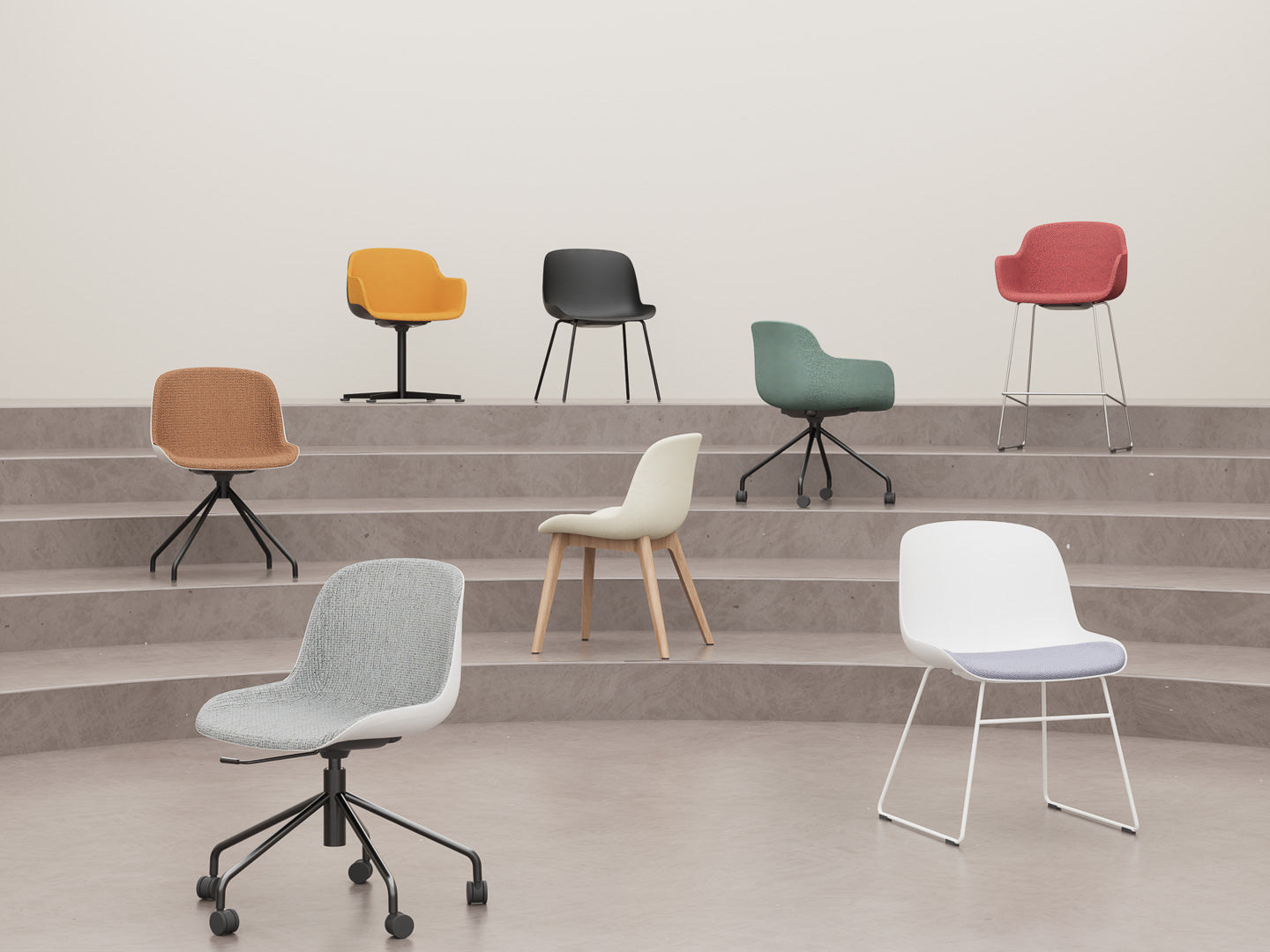
We also collaborate with brands that are actively turning waste into new products, helping reduce reliance on raw materials. This includes seating made from recycled plastics, acoustic solutions produced from textile waste, and products supported by Declare Labels or Environmental Product Declarations that provide transparency around their impact.
Recycling plays an important role, but it is not the first step. Wherever possible, we prioritise reuse and repair, with recycling as the final stage once other options have been exhausted. The goal is not perfection. It is to minimise waste at every stage and ensure that fewer materials end up where they should not.